
Intermittent Fasting as a Lifestyle: Daily Habits & Tips
Intermittent fasting is often discussed as a structured eating schedule, but for many people, it gradually becomes part of a broader daily lifestyle. This article focuses on general habits, routines, and practical tips that can help individuals better understand how intermittent fasting may fit into everyday life.
All information provided here is for educational and informational purposes only. Individual experiences vary, and this content does not provide medical advice.
Viewing Intermittent Fasting as a Daily Routine
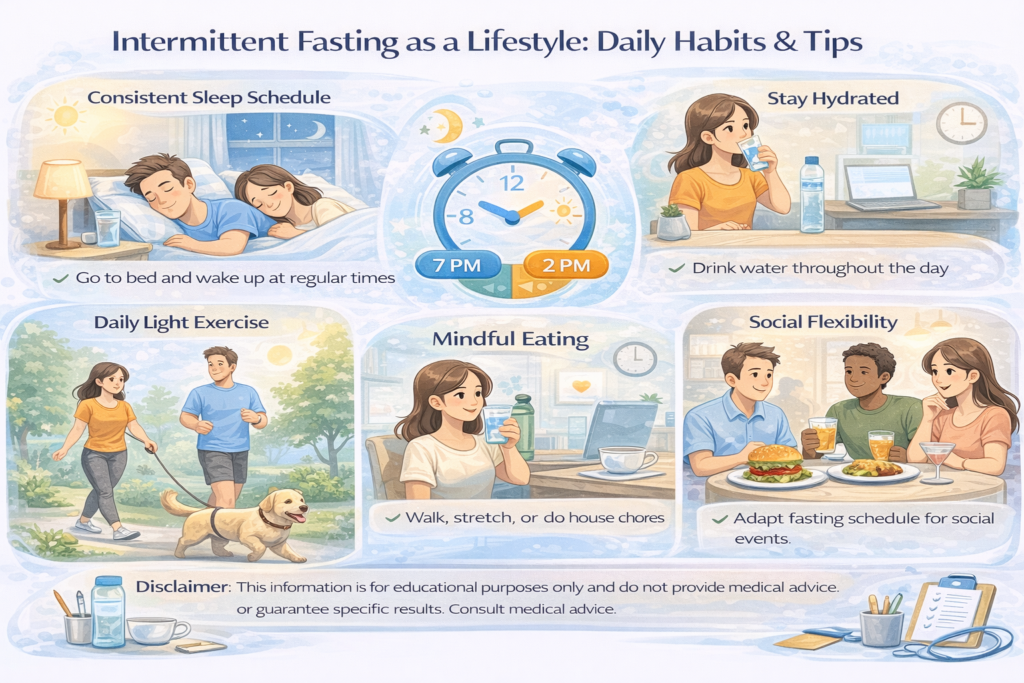
Rather than focusing solely on fasting hours, many people approach intermittent fasting as a way to create more structure in their daily routine. Consistency in sleep, meal timing, and hydration often plays a key role in maintaining a sustainable schedule.
Establishing predictable daily habits may help individuals stay organized and mindful of their eating patterns without overcomplicating their lifestyle.
Sleep and Daily Schedule
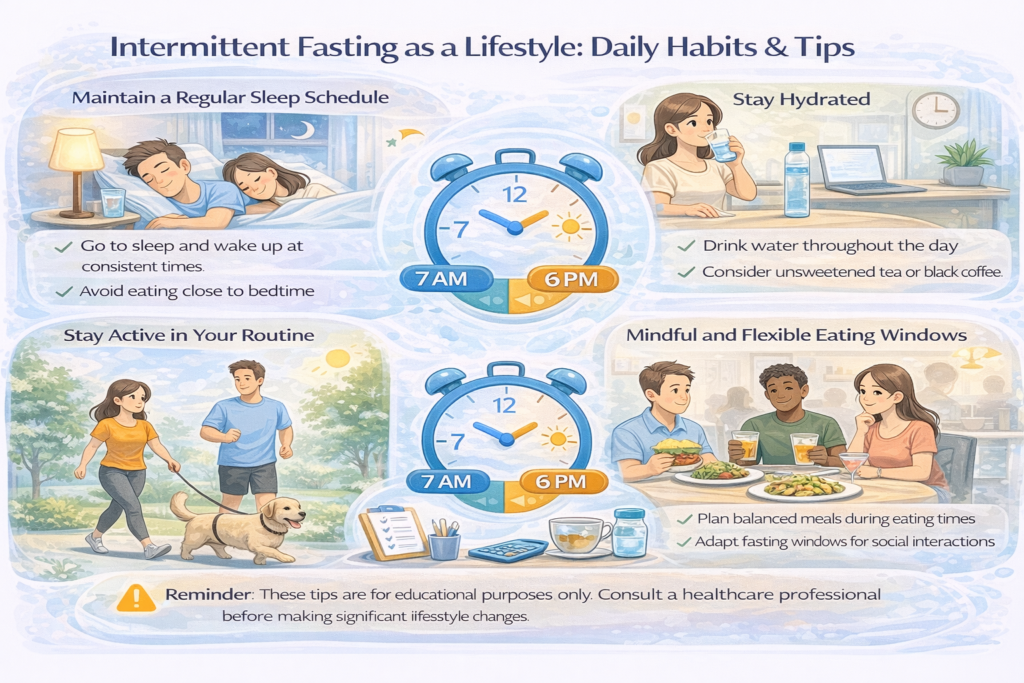
A regular sleep schedule is commonly emphasized in general wellness discussions. Going to bed and waking up at similar times each day can support overall routine stability.
- Aim for consistent sleep and wake times
- Avoid large meals close to bedtime when possible
- Create a calm evening routine to support rest
Sleep needs vary between individuals, and adjustments should be made based on personal comfort and daily responsibilities.
Hydration Throughout the Day
Staying hydrated is a general wellness recommendation regardless of eating patterns. During fasting periods, many people choose to drink water or other non-caloric beverages to maintain hydration.
- Drink water regularly throughout the day
- Unsweetened tea or black coffee are commonly consumed during fasting periods
- Listen to your body’s hydration signals
Hydration needs depend on factors such as activity level, climate, and individual preferences.
Daily Activities and Movement
Light to moderate daily movement is commonly associated with general well-being. Many people continue their usual activities while following intermittent fasting schedules.
Examples of everyday movement include:
- Walking or gentle stretching
- Daily household activities
- Regular work or commuting routines
There is no universal activity requirement. Individuals often adapt their activity levels based on personal energy levels and schedules.
Mindful Eating During Eating Windows
During eating windows, some individuals choose to focus on mindful eating practices. This may include paying attention to portion sizes, meal timing, and overall food choices.
Mindful eating is not about restriction, but rather about awareness and balance within one’s routine.
Managing Social and Work Life
Daily life includes social events, work commitments, and family responsibilities. Many people adjust their fasting schedules flexibly to accommodate these situations.
- Occasional schedule adjustments are common
- Consistency over time is often considered more important than perfection
- Flexibility helps maintain long-term habits
Important Disclaimer
Intermittent fasting practices and lifestyle habits vary widely between individuals. This article provides general lifestyle information only and does not offer medical advice, diagnosis, or treatment.
Before making significant changes to eating patterns, physical activity, or daily routines, individuals should consult a qualified healthcare professional, especially if they have existing medical conditions or specific health concerns.
Final Thoughts
Viewing intermittent fasting as part of a broader lifestyle may help some individuals maintain consistency and balance. By focusing on daily routines, hydration, sleep, and flexibility, intermittent fasting can be approached as a structured yet adaptable way of organizing daily habits.
Ultimately, each person’s experience is unique, and long-term sustainability depends on personal preferences, comfort, and professional guidance.