
Common Goals People Have with Intermittent Fasting
Intermittent fasting has gained attention as a flexible eating pattern rather than a strict diet plan. People explore intermittent fasting for a variety of personal reasons, often related to lifestyle preferences, routine structure, or general wellness interests.
It is important to understand that individual experiences vary, and intermittent fasting is not a guaranteed solution for any specific outcome. The following sections describe common motivations people report when trying intermittent fasting, not promised results.
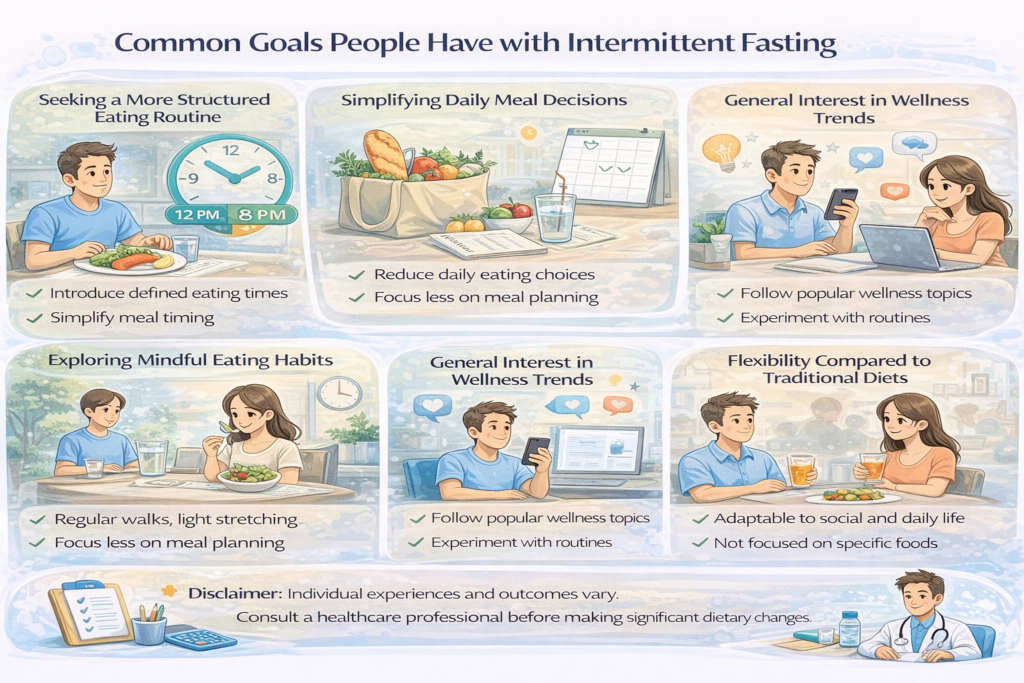
Seeking a More Structured Eating Routine
One of the most common reasons people try intermittent fasting is to introduce structure into their daily eating habits. Having defined fasting and eating windows may help some individuals become more aware of when they eat, rather than focusing solely on what they eat.
For people with irregular schedules or frequent snacking habits, a time-based eating framework can feel easier to follow than detailed meal planning.
Simplifying Daily Meal Decisions
Some individuals are drawn to intermittent fasting because it may reduce the number of daily eating decisions. Fewer meals or a shorter eating window can simplify grocery planning, meal preparation, and daily routines.
This simplicity is often cited as a lifestyle preference rather than a performance-based goal.
Exploring Mindful Eating Habits
Intermittent fasting can encourage people to become more mindful about their eating patterns. By separating eating time from non-eating time, some individuals report paying closer attention to hunger cues and meal timing.
This awareness does not imply better outcomes for everyone, but it can be part of a broader effort to build intentional habits around food.
General Interest in Wellness Trends
Many people try intermittent fasting simply because it is a widely discussed wellness topic. Curiosity, social exposure, or recommendations from friends and online communities often play a role in motivating individuals to experiment with fasting schedules.
Trying intermittent fasting does not require long-term commitment, which can make it appealing as a short-term lifestyle experiment.
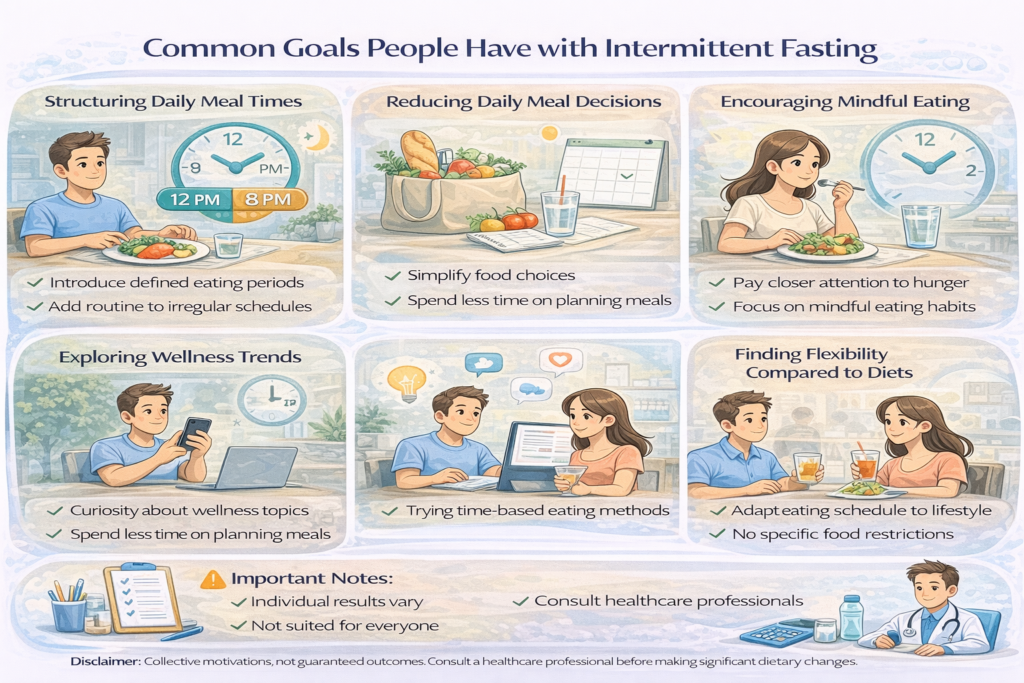
Flexibility Compared to Traditional Diets
Unlike rigid diet plans that prescribe specific foods, intermittent fasting focuses primarily on timing. This flexibility may appeal to individuals who prefer not to follow restrictive food rules.
For some, this approach feels more adaptable to social events, cultural eating patterns, and changing daily schedules.
Important Considerations
While people have different reasons for trying intermittent fasting, it is essential to recognize that:
- Individual responses vary significantly
- Intermittent fasting is not suitable for everyone
- There are no guaranteed outcomes
Anyone considering changes to their eating patterns should evaluate their personal health situation and consult a qualified healthcare professional if they have concerns, especially if they are pregnant, nursing, managing medical conditions, or taking medication.
Conclusion
Intermittent fasting attracts interest for many reasons, including routine structure, simplicity, curiosity, and lifestyle flexibility. Understanding these motivations can help individuals make informed, responsible decisions without unrealistic expectations.
This content is provided for educational and informational purposes only and does not constitute medical advice.