
Is Intermittent Fasting Safe? What You Should Know
Intermittent fasting has gained popularity as a lifestyle approach to eating, but many people ask an important question: Is intermittent fasting safe? This article provides general educational information to help users better understand potential considerations, limitations, and safety factors.
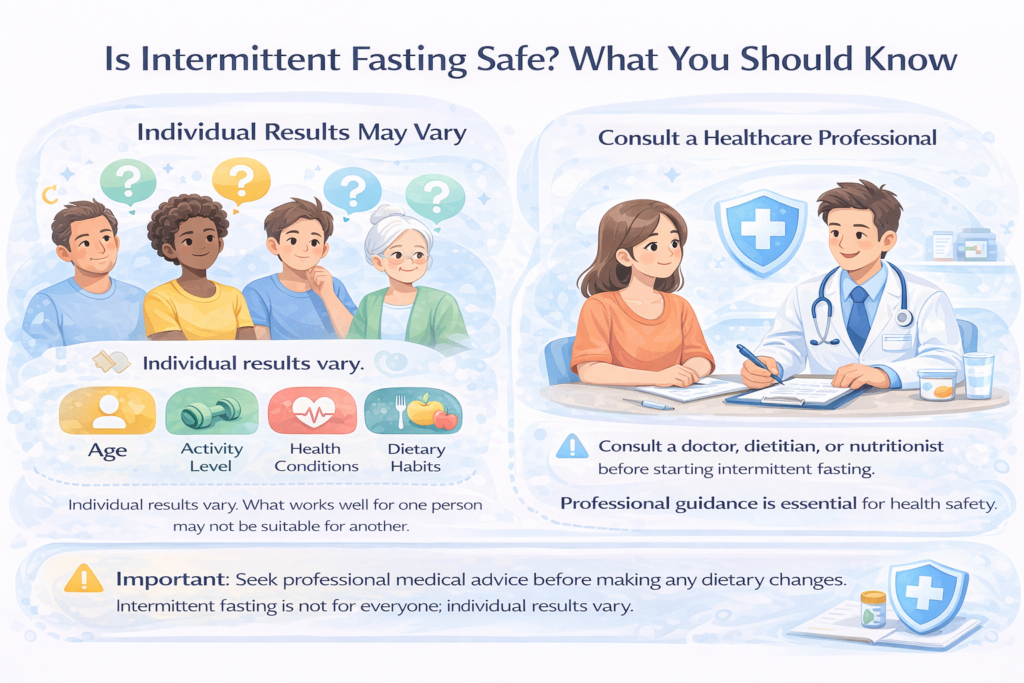
Individual Results May Vary
It is important to understand that individual results vary significantly when it comes to intermittent fasting. Factors such as age, lifestyle, activity level, existing health conditions, and nutritional habits can all influence how a person responds.
What works well for one individual may not be suitable for another. Intermittent fasting is not a one-size-fits-all approach.
Intermittent Fasting Is Not Medical Treatment
Intermittent fasting should not be considered a medical treatment, therapy, or cure. It is a general eating pattern that focuses on meal timing rather than specific foods or medical outcomes.
This website and its tools provide educational and informational content only and do not offer medical advice, diagnosis, or treatment.
Who Should Be Especially Cautious?
Certain individuals should exercise additional caution or avoid intermittent fasting unless advised otherwise by a qualified healthcare professional:
- Pregnant or breastfeeding individuals
- People with diabetes or blood sugar regulation issues
- Individuals with a history of eating disorders
- People taking medications that require regular food intake
- Individuals with chronic medical conditions
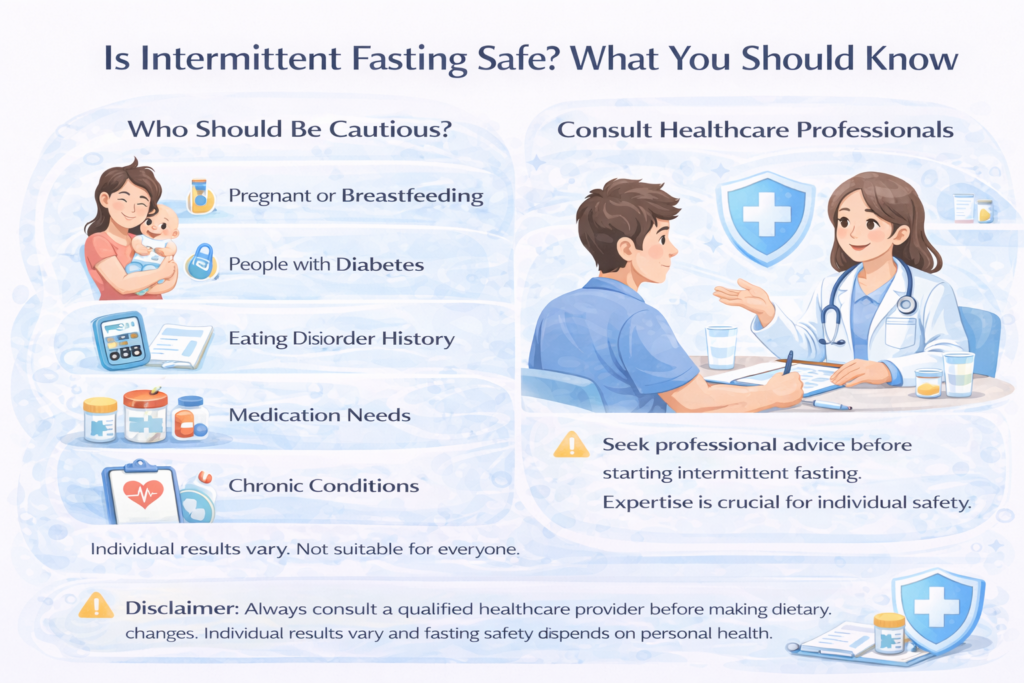
Consult a Healthcare Professional
Before starting intermittent fasting or making significant dietary changes, it is strongly recommended to consult a qualified healthcare professional, such as a doctor, registered dietitian, or licensed nutritionist.
A healthcare provider can help determine whether intermittent fasting is appropriate based on individual health circumstances.
Listening to Your Body Matters
Even for generally healthy individuals, paying attention to physical signals is important. Symptoms such as dizziness, weakness, fatigue, headaches, or difficulty concentrating may indicate that adjustments are needed.
Discontinuing or modifying fasting routines should always be considered if discomfort or adverse symptoms occur.
Summary
Intermittent fasting may be safe for some individuals, but it is not universally suitable for everyone. Individual results vary, and professional guidance is essential for making informed decisions.
This content is intended to support awareness and education, not to replace personalized medical advice.