
Intermittent fasting is a popular eating pattern that focuses on when you eat rather than what you eat. Instead of restricting specific foods, it organizes daily or weekly schedules into periods of eating and fasting. This approach has gained widespread attention for its simplicity and potential health benefits.
What Is Intermittent Fasting?
Intermittent fasting (often abbreviated as IF) is an eating pattern that alternates between fasting windows and eating windows. During fasting periods, calorie intake is reduced significantly or eliminated altogether, while normal meals are consumed during eating periods.
Unlike traditional diets, intermittent fasting does not prescribe specific foods. Instead, it provides a structured time framework that many people find easier to maintain long term.
How Intermittent Fasting Works
When you eat, your body uses glucose from food as its primary energy source. During a fasting period, once glucose levels drop, the body begins to rely more on stored energy. This metabolic shift is one reason intermittent fasting is often associated with improved metabolic efficiency.
Fasting periods may vary in length depending on the chosen protocol. Some methods involve daily fasting windows, while others involve fasting on specific days of the week.
Common Intermittent Fasting Methods
There are several widely used intermittent fasting approaches, each offering different levels of flexibility:
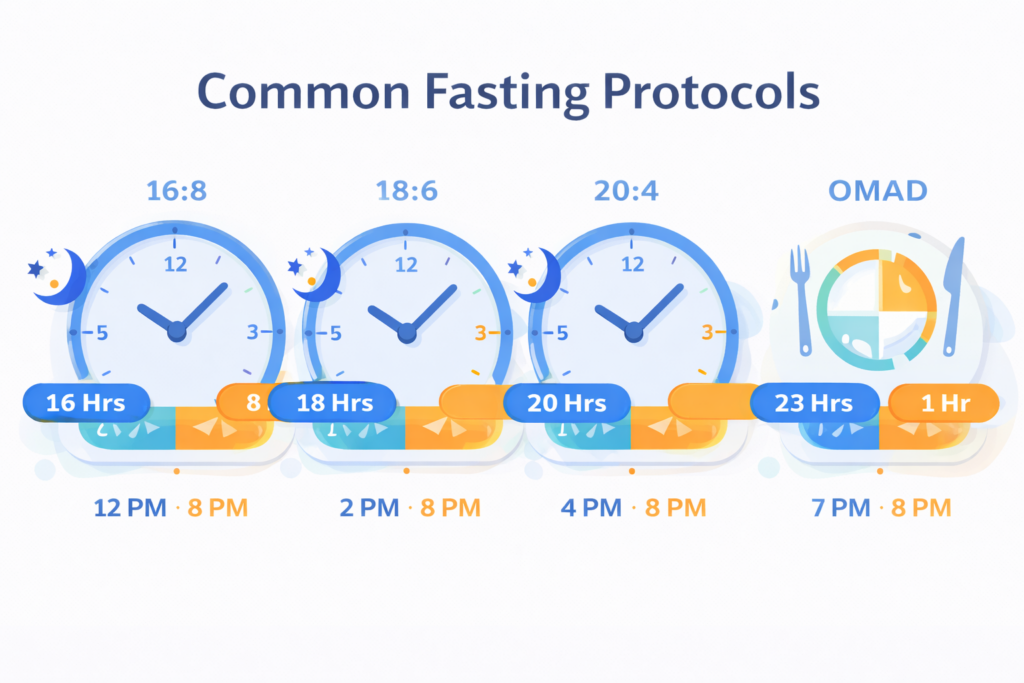
- 16:8 Method – Fast for 16 hours and eat within an 8-hour window
- 18:6 Method – A slightly longer fasting window with a 6-hour eating period
- 20:4 Method – Often referred to as the Warrior Diet
- OMAD – One Meal A Day, consuming all calories in a single meal
- 5:2 Method – Eat normally five days a week, reduce calories on two non-consecutive days
Each method suits different lifestyles, schedules, and experience levels. Beginners often start with shorter fasting windows before gradually increasing duration.
Who Is Intermittent Fasting Suitable For?
Intermittent fasting may be suitable for adults who are generally healthy and looking for a structured approach to eating. Many people choose intermittent fasting for weight management, routine consistency, or lifestyle simplicity.
However, fasting may not be appropriate for everyone. Individuals with certain medical conditions, pregnant or nursing individuals, or those with a history of eating disorders should consult a healthcare professional before starting.
Hydration and Fasting
Staying hydrated is important during fasting periods. Water is typically encouraged, and some people also consume non-caloric beverages such as unsweetened tea or black coffee.
Electrolyte balance can also play a role, especially during longer fasting windows. Listening to your body and adjusting as needed is essential.
Is Intermittent Fasting Safe?
For many healthy adults, intermittent fasting is generally considered safe when practiced responsibly. That said, individual responses can vary. Common early experiences may include hunger, fatigue, or difficulty concentrating, which often improve as the body adapts.
It is always recommended to approach fasting gradually and discontinue if adverse symptoms occur. Professional medical advice should be sought when necessary.
Using Tools to Plan Your Fasting Schedule
Fasting calculators and planning tools can help determine suitable fasting and eating windows based on personal schedules and goals. These tools provide structure and clarity, making it easier to follow an intermittent fasting routine consistently.
Using a calculator can also help users visualize fasting periods and plan meals more effectively, especially when starting out.
Final Thoughts
Intermittent fasting is a flexible and widely adopted eating pattern that emphasizes timing rather than restriction. With various methods available, individuals can choose an approach that fits their lifestyle and preferences.
Understanding the basics of intermittent fasting is the first step toward making informed decisions. As with any dietary approach, consistency, awareness, and personal suitability are key.
Disclaimer: This content is for informational purposes only and does not constitute medical advice. Always consult a qualified healthcare professional before making significant dietary changes.


