
How Fasting Windows Are Calculated
Intermittent fasting calculators are designed to help users understand and plan their fasting and eating schedules based on common fasting protocols and simple time-based calculations. This page explains how fasting windows are calculated and what the results represent.
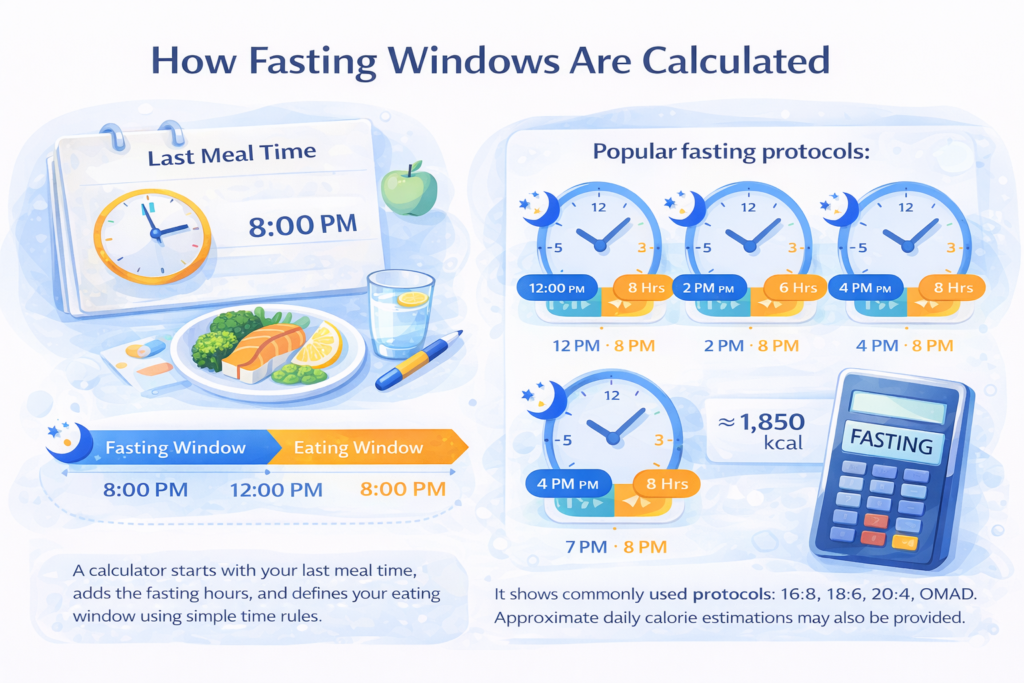
Understanding Fasting Windows
A fasting window refers to the period of time during which no calories are consumed. An eating window is the remaining time in a 24-hour day when meals are allowed. Common intermittent fasting methods are defined purely by time duration, not by calorie precision or medical assessment.
For example:
- 16:8 fasting means 16 hours of fasting followed by an 8-hour eating window.
- 18:6 fasting
- 20:4 fasting
- OMAD (One Meal A Day) typically involves about 23 hours of fasting.
How the Calculator Determines Your Fasting Schedule
The intermittent fasting calculator uses your selected fasting protocol and your last meal time to estimate your fasting and eating windows. The calculation follows a simple and transparent process:
- The last meal time is used as the starting point.
- The fasting duration associated with your selected protocol is added.
- The result determines when your fasting period ends.
- The eating window is calculated as the remaining time in a 24-hour cycle.
For example, if your last meal was at 8:00 PM and you select a 16:8 fasting protocol:
- Your fasting period runs from 8:00 PM to 12:00 PM the next day.
- Your eating window runs from 12:00 PM to 8:00 PM.
Calorie Estimates and Activity Levels
Some fasting calculators also display estimated daily calorie needs. These values are typically calculated using widely accepted formulas such as basal metabolic rate (BMR) estimates combined with general activity multipliers.
It is important to understand that calorie numbers shown are approximations, not precise nutritional recommendations. They are intended for general informational use only.
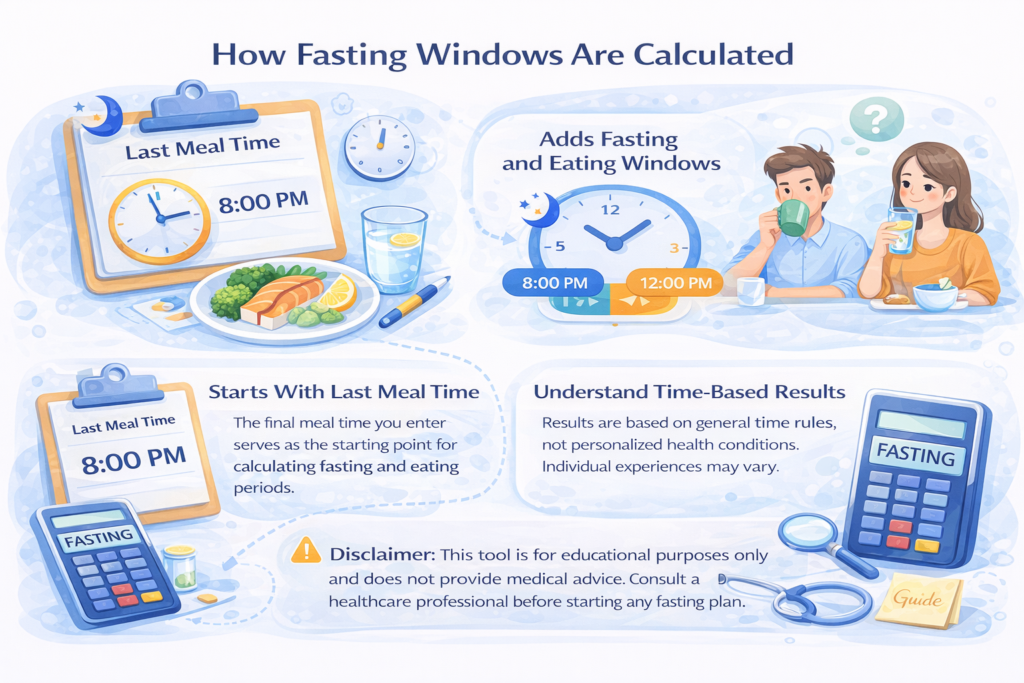
Why Results May Vary Between Individuals
Fasting windows are calculated using standardized time rules, but individual experiences may vary. Factors such as sleep patterns, physical activity, metabolic differences, and lifestyle habits can all influence how fasting feels and how results are perceived.
The calculator does not account for medical conditions, medications, or personal health history.
Important Disclaimer
This fasting calculator is provided for educational and informational purposes only. It does not provide medical advice, diagnosis, or treatment.
Intermittent fasting may not be suitable for everyone. If you are pregnant, nursing, have a medical condition, or are taking medication, you should consult a qualified healthcare professional before making dietary changes.
Using the Calculator Responsibly
The purpose of this tool is to help users understand fasting schedules and time-based eating patterns. Always listen to your body and adjust your approach as needed.
For long-term health decisions, professional medical guidance is strongly recommended.


